Revanth Darshan D R
Loading the field 0%
Revanth Darshan D R
Loading the field 0%
AI / ML Engineer. Engineer in AI, Automation, ML.

I studied computer science at VIT Chennai, specialising in AI and machine learning, and graduated in 2025.
I’m most interested in getting models into real use: dealing with the input people actually send, finding where things fail, and catching mistakes.
In my spare time I build my own projects. Reman and GEM started that way.
Away from the keyboard I click photos :) and like nature, long walks and places I haven’t been yet.
Certifications: Claude Certified Architect (Professional), AWS Solutions Architect and AWS Cloud Practitioner. I mostly write Python, and use C++, Java and SQL when needed.
Python · TensorFlow · Keras · Computer vision · Deep learning · Pandas · NumPy
Agentic AI · Claude · MCP · Prompt engineering · NLP · RLHF
AWS · Azure DevOps · CI/CD · Docker · Rust · SQL
From data science and prompt engineering to agentic automation at TCS.
I work as an AI process orchestrator, building automation that covers document generation, database operations and UI workflows. I use RPA to pull structured requirements out of legacy systems that have no API. I also built an agentic requirements generator that reached the regional round of the TCS internal AI hackathon.
Led GreenCode AI, a tool that reviews code for energy use. It runs as a VS Code extension and a pre-commit hook, so developers get the feedback inside the workflow they already use.
Wrote and refined 150+ prompts against human feedback, and was promoted from attempter to reviewer within six months. On the Nightingale multimodal project I worked on extracting structured data from images, which improved accuracy by about 25%.
Built web scrapers for market-intelligence data, cutting collection time by about a third. The data fed risk-assessment and demand models.
Products and tools first, then research.
A command-line tool that makes shell history searchable by meaning. Type “undo my last commit” and it finds the git command you used before, with how often it worked. AI coding agents can use it too, over MCP. Written in Rust; a search takes about 8 ms.
It started as an AI layer on top of Atuin, and Atuin released its own AI features before Reman was ready. So I rebuilt it as a standalone tool with its own command capture, focused on what worked, what fixed a failure, and access for AI agents. The hard part then was capturing every command without slowing the shell down: native hooks for PowerShell, bash, zsh and fish add 0–5 ms per command, and search runs on every keystroke against a local embedding model through ONNX Runtime. Secrets are masked before a command is saved, and if a secret can't be located the command isn't saved at all. On a fresh Windows install PowerShell blocks profile scripts, so setup detects that and asks to allow the user's own scripts.
A matrimony and community app I built for a client. It's live with 30+ members. I did the whole stack: React Native app, FastAPI backend, Postgres, Redis, Docker and nginx, and the Play Store releases.
Building and running every layer on my own, from the mobile app to the servers, and shipping it in three languages: English, Telugu and Tamil.
An AI assistant for insurance claims. Customers check their claim and upload documents; staff review and approve. Built on FastAPI with a set of LLM agents, plus a Playwright bot that files approved claims into the insurer's core system.
Keeping the AI out of decisions it shouldn't make. The model only explains and answers; every verdict comes from rule functions, facts in a reply are checked against the tool results before it's sent, and prompt-injection attempts are blocked in about 15 ms, before any model call. Claim intake runs through interactive cards, one question at a time with document upload, instead of a long form.
A memory system for personal AI assistants. When one fact changes, GEM updates the facts that depend on it. It scored 100% on 37 test facts, 27 points above standard vector memory.
Deciding how a change should spread. I built and tested six invalidation designs, including lazy, graph-guided and anchor-stamping, before settling on an eager cascade down typed DERIVED_FROM edges, with a cycle guard for facts that depend on each other. Conflict detection and dependency linking run as two separate passes on each write. Scanning every stored fact on each write was expensive, so a similarity gate now cuts that cost by about 88% with no loss in accuracy.
A clock app for Windows, published on the Microsoft Store.
Packaging it for the Store, getting it through store review, and shipping updates to people using it.
A lightweight deepfake detector: a MobileNetV2 branch for the image, an FFT branch for its frequency spectrum, and transformer layers on top. 99.34% accuracy on Celeb-DF with 5.6M parameters, about a quarter of ResNet50.
Good deepfakes look real pixel by pixel but leave traces in the frequency spectrum. The model had to catch those and stay small: 21 MB against 91 MB for ResNet50. Trained across three datasets, about 5.4 GB of real and fake faces.
Email is the quickest way to reach me.

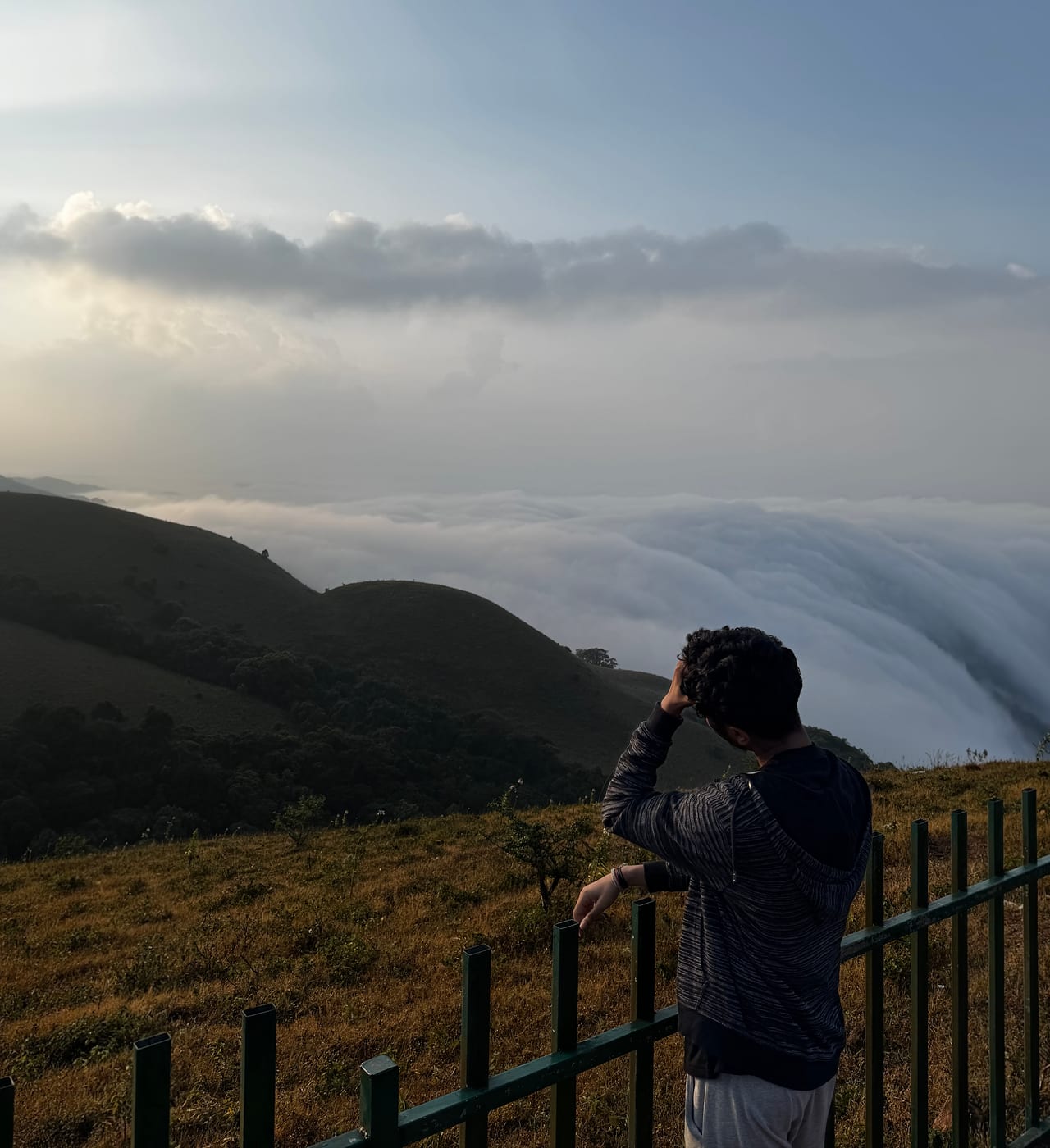


Nature, long walks, places I hadn’t been yet — the same curiosity that pulls me into new tech, pointed at the world instead. ( every frame here is mine )